
AI Studio / AI-HumanERP
ERP adapted to the real company.
AI-HumanERP combines an operational core with interfaces, workflows, modules and assistants designed in partnership with the client.
An ERP should not force a company to stop being itself.
Problem
When the ERP cannot keep up, Excel returns.
Rigid systems create invisible workarounds: critical spreadsheets, duplicated information, low adoption and parallel processes. AI-HumanERP starts from a common core, then adapts the operational experience to the unique reality of the company.
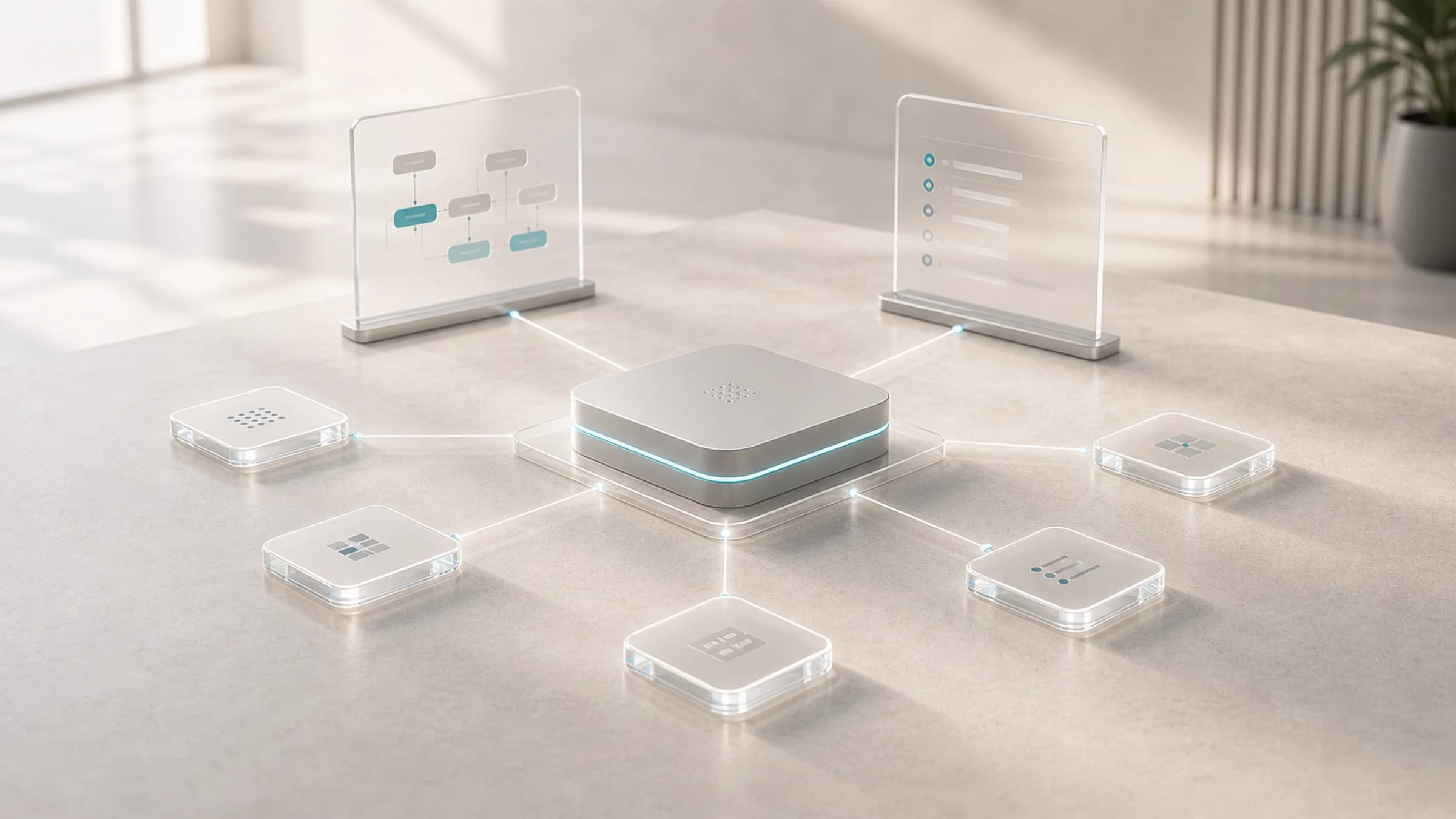
System map
What AI-HumanERP includes
An intelligent, modular and evolving operating system.
Operational core
A common base for data, entities, permissions, integrations and business logic.
Custom interfaces
Screens and flows designed around how teams actually work.
Intelligent workflows
AI-assisted processes, agents and governed business rules.
Dashboards
Visibility for management, operations, finance, commercial teams and leadership.
Internal assistants
Contextual support for employees in research, validation and execution.
Governance
Security, permissions, traceability, compliance and controlled autonomy.
Method
How we implement it
We start with what the company is, not with what software demands.
- Audit
Audit operations
Current systems, critical Excel files, processes, data and dependencies.
- Design
Design modules
Core, interfaces, workflows, permissions and priorities.
- Deploy
Deploy in phases
Fast-value modules, team adoption and gradual integration.
- Enable
Transfer capability
Training, documentation and evolution with internal teams.
Next step
Want to find where this creates the most impact?
Bitsapiens starts by mapping processes, data, decisions and friction to identify where intelligent software, AI and workflows can generate productivity, profitability and control.

Applications
Possible areas
FAQ
Direct answers.
Structured questions that help decision-makers and answer engines quickly understand the Bitsapiens proposition.
Is AI-HumanERP meant to replace the current ERP?
Not necessarily. It can start as modules, interfaces or workflows that complement existing systems before any deeper structural evolution.
What problems does it solve?
It addresses operational rigidity, critical spreadsheets, duplicated information, low adoption and invisible parallel processes.
Why not lead with ERP?
Many companies already have ERP and changing it can create resistance. The approach should begin with performance, operating layers and clear use cases.
When does AI-HumanERP make sense?
When the company needs more operational structure without erasing the singular way it creates value.
ERP should adapt to the company.
AI-HumanERP gives structure without erasing the operational singularity that makes each company competitive.